

TV Console Ideas to Maximize Space in Small Apartments
In a small apartment, the TV console is rarely just a stand for your television. It is the anchor of your living room, a storage workhorse, and often the divider between functional zones. With space at a premium, choosing the wrong console can make your living area feel cramped and cluttered, while the right one can transform it into a sleek, organized, and airy haven.
If you are struggling to balance style with storage in a compact home, here are the best TV console ideas designed to maximize space without compromising on aesthetics.
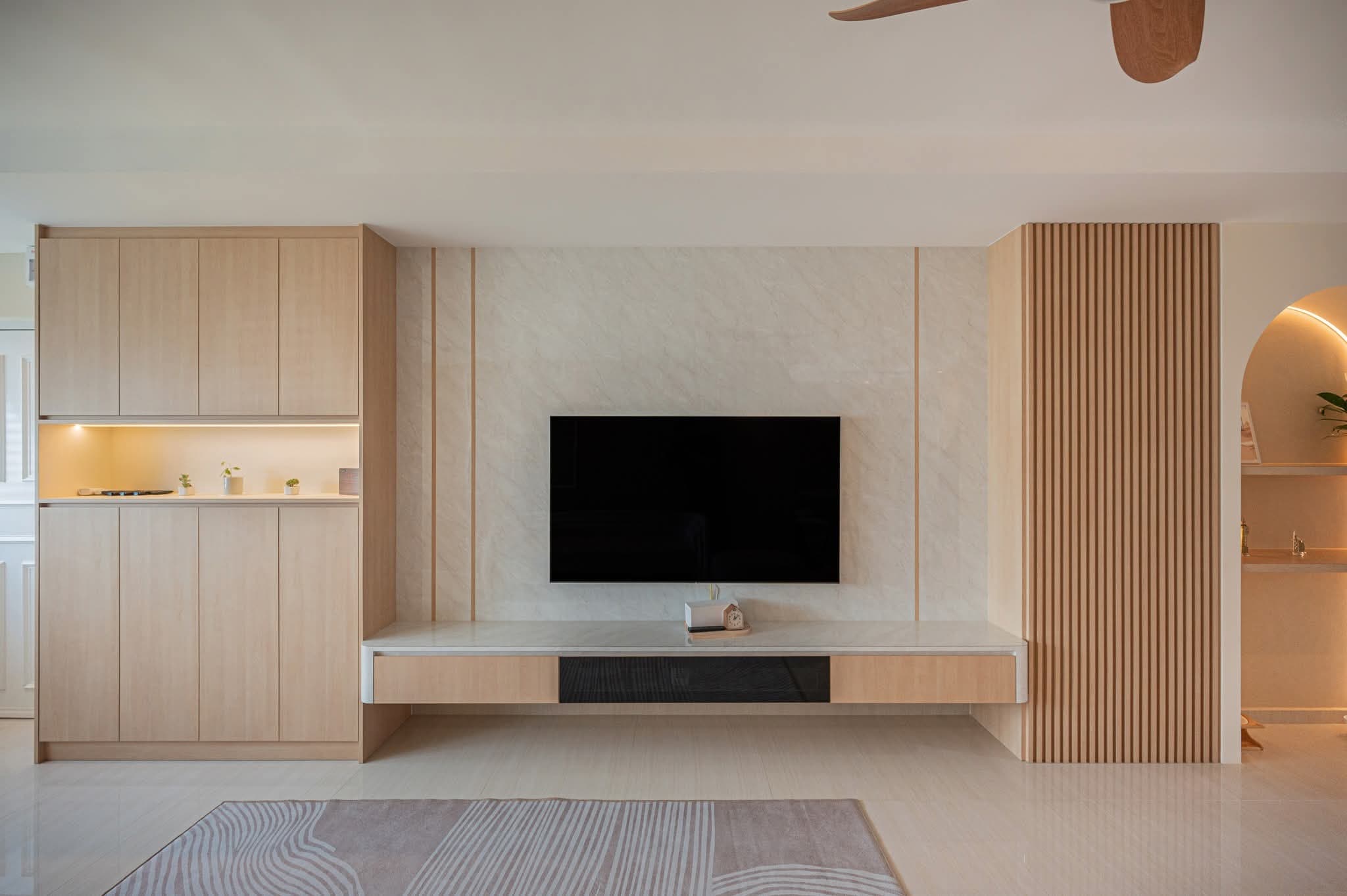
1. The Floating Console: Creating Visual Airiness
One of the most effective tricks for small spaces is to take furniture off the floor. A floating TV console (wall-mounted) creates a sense of openness that a solid, floor-based unit simply cannot match.
Why it works: By exposing the floor beneath the console, you extend the visual line of the room, making the space appear larger. It also eliminates the "dust trap" area underneath that is difficult to clean—a blessing in any home.
Best for: Apartments with minimalist or Scandinavian aesthetics, especially those with marble or wood-grain flooring that you want to show off.
SG Context: In HDB flats, ensure your contractor uses proper heavy-duty brackets anchored into the wall (not just glued or lightly screwed) to support the weight of the TV and equipment.
Pro Tip: Pair this with recessed LED lighting underneath the console. The uplighting effect creates a "floating" illusion and doubles as a cozy ambient light for movie nights.
2. The Full-Height Feature Wall: Storage Without Clutter
When floor space is limited, the only way to expand storage is to go vertical. A full-height TV feature wall turns an entire wall into a storage system, eliminating the need for separate bookshelves, display cabinets, or sideboards.
Why it works: It consolidates all living room storage into one sleek facade. You can hide bulky items (like luggage or vacuum cleaners) behind closed cabinets on the sides, while keeping the center open for the TV.
Design Variations:
Closed + Open Concept: Use closed cabinets with push-to-open mechanisms to hide clutter, combined with open niches or glass-fronted sections to display decor and prevent the wall from feeling too heavy.
The Monochrome Look: Painting the entire feature wall (including the cabinets) the same color as the surrounding walls makes the unit recede visually, tricking the eye into perceiving more space.
Pro Tip: For BTO flats with a "bomb shelter" (household shelter) in the living room, a full-height TV console is an excellent way to integrate the unsightly metal door into the design, making it virtually invisible.
3. The Room Divider Console: Open-Concept Solutions
In shoebox condos and studio apartments, the living room and bedroom or dining area often share one open space. A TV console can double as a room divider, creating separation without the need for a solid wall that kills the sense of space.
Why it works: It defines zones (e.g., "this is the living room, behind this is the bedroom") while maintaining an open flow. It also allows the TV to be viewed from multiple areas.
Design Considerations:
Double-Sided Units: Opt for a console that is finished beautifully on both sides. One side houses the TV and media equipment; the other side can function as a dresser, bookshelf, or entryway console.
Open Shelving: A floor-to-ceiling unit with open shelving allows light to pass through, preventing the space from feeling closed off.
Height Matters: If you need privacy (for the bedroom side), ensure the unit extends to at least 1.5m to block the view of the bed from the sofa.
Pro Tip: Use a swivel wall mount for the TV. This allows you to angle the screen towards the sofa during the day and towards the bed at night, maximizing functionality.
4. The Slimline and Shallow Console: Narrow Depth Solutions
Many small apartments, particularly older HDB flats and newer shoebox units, have narrow living room layouts where a standard 40–50cm deep console would protrude too far into the walkway.
Why it works: A shallow console (20–30cm depth) provides just enough space for the TV base and essential electronics without obstructing the flow of foot traffic.
Design Approach:
Custom Slim Cabinets: If you are doing built-in carpentry, request a depth of just 25–30cm for the TV console. Use the vertical space above with wall-mounted shelves to compensate for the loss of horizontal storage.
Wire Management: With slim consoles, hiding wires becomes crucial. Ensure the unit has built-in cable management holes or a recessed back panel to keep cords from spilling out the sides.
Pro Tip: If you have a protruding column or structural beam in the living room, build the console to wrap around it. Turning an awkward architectural "problem" into a seamless built-in unit makes the space feel intentional rather than compromised.
5. Modular and Multi-Functional Systems: Flexibility for Changing Needs
For renters or homeowners who prefer flexibility, modular TV consoles offer the ability to reconfigure as your needs change. These systems consist of individual components (floating shelves, cabinets, vertical units) that can be arranged and rearranged.
Why it works: You are not locked into a fixed layout. If you upgrade to a larger TV, want to add a soundbar, or decide to create more floor space for a child's play area, you can simply move the modules around.
Popular Systems: Swedish giants like IKEA (BESTÅ system) are immensely popular in Singapore for this reason. They offer a vast range of door fronts, drawer inserts, and suspension rails that allow you to create a custom look at a fraction of the cost of built-in carpentry.
Pro Tip: If using a modular system, wall-mount the cabinets (using the suspension rail) rather than using legs. This gives you the clean look of a floating console with the flexibility of a modular system.
6. The Integrated Console: Merging with Dining or Study
In extremely tight spaces, the TV console may need to share real estate with other essential functions. Integrated designs combine the TV unit with a dining table or home office desk.
TV + Dining: A low console that extends into a breakfast bar or a slim dining table. This works well in studio apartments where the kitchen, dining, and living areas are one continuous space.
TV + Study Desk: A full-height wall unit that houses the TV on top or to the side, with a fold-down desk or a built-in workstation below. This is ideal for WFH setups in 1-bedroom or 2-bedroom flats where a dedicated study room does not exist.
Pro Tip: If combining a desk with a TV console, ensure the desk area has adequate task lighting (LED strips or a dedicated lamp) to reduce eye strain, separate from the ambient lighting used for TV viewing.
Key Design Considerations for Small Apartments
Regardless of which style you choose, keep these universal principles in mind:
1. Cable Management is Non-Negotiable
In a small space, visible wires make the room look messy instantly. Invest in:
In-wall trunking (for HDBs, ensure you are not hacking structural walls; surface trunking can be painted to match the wall).
Cable management boxes that sit inside the console to hide power strips.
Recessed power sockets located behind the TV itself.
2. Proportion is Everything
A common mistake is buying a TV console that is too small or too large for the wall.
Width: The console should be wider than the TV itself (at least 10–15cm on each side). For feature walls, aim for the console to span at least ⅔ of the wall width.
Height: The center of the TV screen should be at eye level when seated (typically 90–110cm from the floor to the center of the screen).