

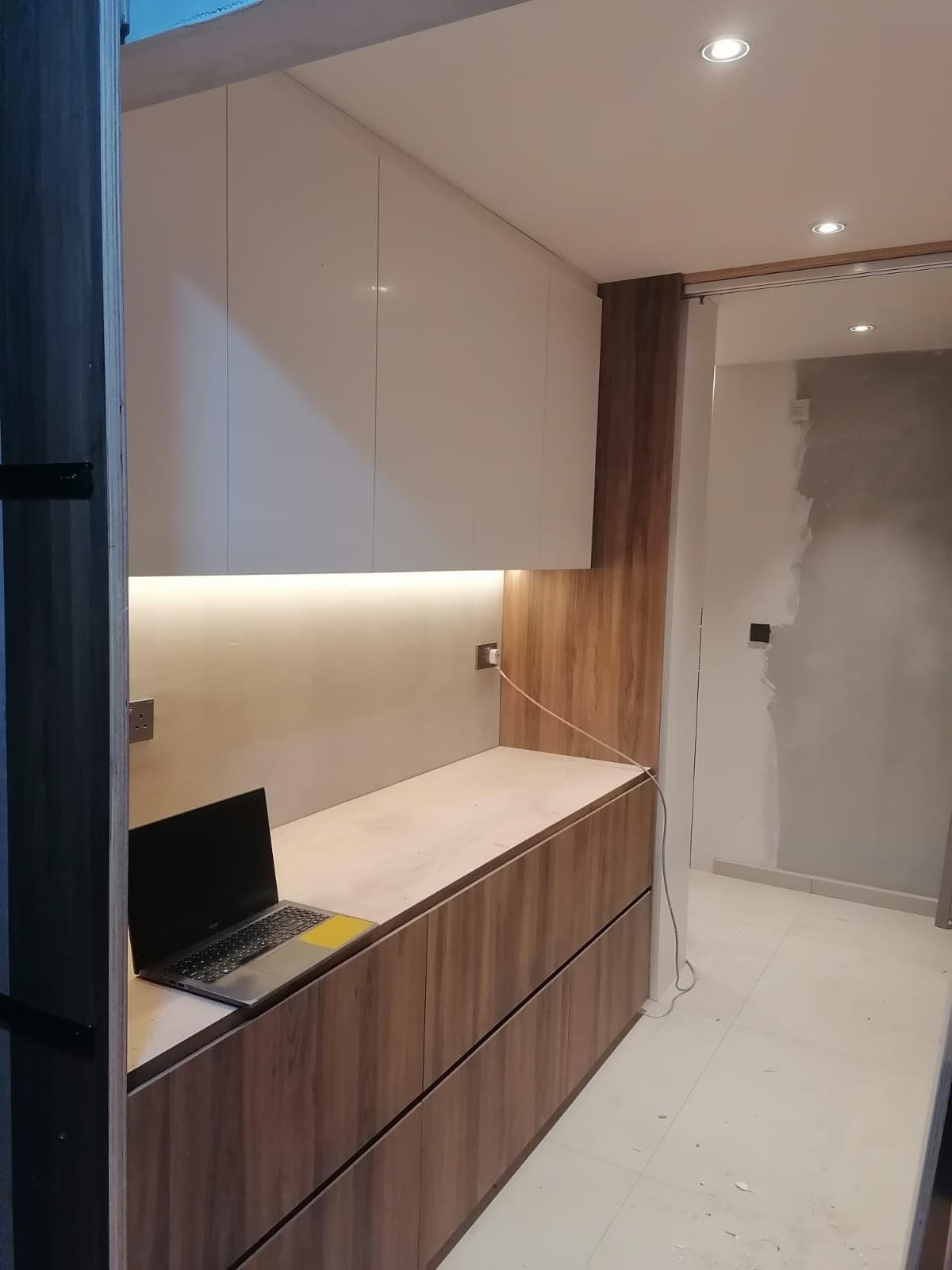
How to Choose the Perfect Wardrobe Cabinet for Your HDB or Condo
After the kitchen, the bedroom wardrobe is arguably the most critical storage piece in any Singapore home. With our tropical climate demanding frequent wardrobe changes and HDB/condo bedrooms often limited in square footage, selecting the right wardrobe is a balancing act between aesthetics, functionality, and durability.
A poorly chosen wardrobe can lead to musty smells, warped doors, and constant clutter. Here is a comprehensive guide to help you choose the perfect wardrobe cabinet for your Singapore home.
1. Know Your Space: Built-In vs. Freestanding
The first decision you will face is whether to go with a built-in (custom) wardrobe or a freestanding (off-the-shelf) unit.
Feature Built-In / Custom Wardrobe Freestanding Wardrobe
Best For Maximizing every inch of space, oddly shaped rooms, floor-to-ceiling storage Rental units, tight budgets, flexibility to rearrange
Pros No dust gap on top; customized internal layout; seamless look Portable; generally cheaper upfront; no installation wait time
Cons Higher cost; permanent fixture (stays with the house if you sell) Gaps around sides/top; wasted vertical space; dust accumulation on top
SG Context Preferred for BTOs and condos to utilize the full height (2.4m to 2.7m) Common in master bedrooms with walk-in alcoves or guest rooms
Verdict: For most Singapore homeowners, a custom built-in wardrobe offers the best return on investment, both in terms of property value and practical storage.
2. The Eternal Debate: Sliding Doors vs. Hinged Doors
In Singapore's compact bedrooms, the door mechanism is not just a style choice—it is a space-saving necessity.
Sliding Doors (Sliding Wardrobe)
Best for: Small bedrooms where space between the bed and wardrobe is tight (common in HDB common bedrooms).
Pros: Requires no swing space; can accommodate full-length mirrors without taking extra room.
Cons: Reduces internal depth slightly (due to the track system); you can only access 50% of the wardrobe at a time.
SG Tip: Opt for soft-close tracks to prevent the loud slamming noises that can disturb light sleepers in our compact flats.
Hinged Doors (Swing Doors)
Best for: Master bedrooms with ample floor space, or walk-in wardrobes (WIC).
Pros: Provides 100% access to the entire wardrobe interior; generally more durable over decades; offers a more luxurious, high-end look.
Cons: Requires at least 60–90cm of clearance in front to open comfortably.
SG Tip: If you choose hinged doors, ensure the swing path does not block the bedroom entrance or clash with bedside tables.
3. Material Matters: Combating Singapore's Humidity
This is the most overlooked aspect of wardrobe selection. Singapore’s high humidity (often 80%+) can wreak havoc on wardrobes, causing laminates to peel, wood to warp, and—most distressingly—mold to grow on clothes and surfaces.
The Carcass (Internal Structure)
This is the "body" of the wardrobe that you do not see. Never compromise here.
Plywood: The gold standard for Singapore. It is sturdy, holds screws well, and has high resistance to moisture. It costs more but lasts decades.
Particle Board / MDF: Cheaper, but highly susceptible to swelling and warping when exposed to humidity. Avoid for full-height wardrobes unless the room is air-conditioned 24/7.
Aluminum: A modern alternative that is 100% waterproof and termite-proof. It is gaining popularity for balcony storage or wardrobes in rooms prone to moisture.
The Finish (Exterior)
Laminate: The most common choice. High-Pressure Laminate (HPL) is thicker and more resistant to heat, scratches, and moisture than Low-Pressure Laminate (LPL) . Textured laminates (matte or linen) hide fingerprints better than high-gloss.
Spray Paint (PU Paint): Offers a luxurious, seamless car-like finish. However, it is softer and prone to chipping in high-traffic homes. It is beautiful but requires careful maintenance.
4. Internal Layout: Beyond the Hanging Rod
A common mistake is designing a wardrobe with just one long hanging rod and a shelf. In Singapore, where we own everything from formal office wear to casual shorts and heavy winter wear (for travel), zoning is key.
The 70/20/10 Rule: Allocate 70% for hanging (long and short), 20% for drawers (folded tees, underwear), and 10% for high shelves (luggage, bulky blankets).
Drawers vs. Shelves: Deep shelves become "black holes" where items get lost. Deep drawers are far more efficient for folded clothes, allowing you to see everything at a glance.
Accessories Storage: Incorporate a narrow pull-out rack or dedicated compartment for ties, belts, and jewelry. This prevents clutter on dresser tops.
The "Winter" Section: Singaporeans travel frequently. Consider a top shelf deep enough to store a medium-sized luggage or a vacuum bag of winter jackets.
5. Style Trends for 2026 and Beyond
While functionality is king, aesthetics define the mood of your sanctuary. Here are the trending styles for Singapore bedrooms:
The Minimalist Flush Panel
This style uses slab doors with no protruding handles (J-pull or push-to-open). It creates a seamless, wall-like appearance, making the bedroom look larger and less cluttered. It pairs perfectly with matte neutral tones like taupe, dove grey, or off-white.
The Glass Accent
To break the monotony of solid wood, many homeowners are adding a vertical strip of fluted glass or tinted glass to sliding doors. This adds texture and allows a peek into the wardrobe while breaking up the visual heaviness of a large cabinet.
Woodgrain Warmth
Similar to kitchen trends, woodgrain laminates (especially in lighter oak or walnut) are being used to create a Scandinavian or Japandi (Japanese + Scandinavian) aesthetic. Using woodgrain for the wardrobe doors adds a natural, calming element to the bedroom.
6. Walk-In Wardrobes (WIC): A Luxury Worth Considering
If you have a master bedroom large enough (or if you are combining two rooms in a condo), a walk-in wardrobe is the ultimate luxury.
Space Requirements: You need a dedicated space of at least 4–6 square meters to make a WIC comfortable.
Open Concept: Unlike built-in cabinets, WICs often use open shelving or glass doors. While stunning, note that in Singapore’s climate, open wardrobes require diligent dusting and a dehumidifier to prevent clothes from absorbing ambient moisture.
Lighting: Good lighting is non-negotiable. LED strip lights on motion sensors not only look hotel-like but also help you see your clothing colors accurately in the absence of natural light.